Launch offer — valid today only

📄 Digital book in PDF · read it on your phone or print it

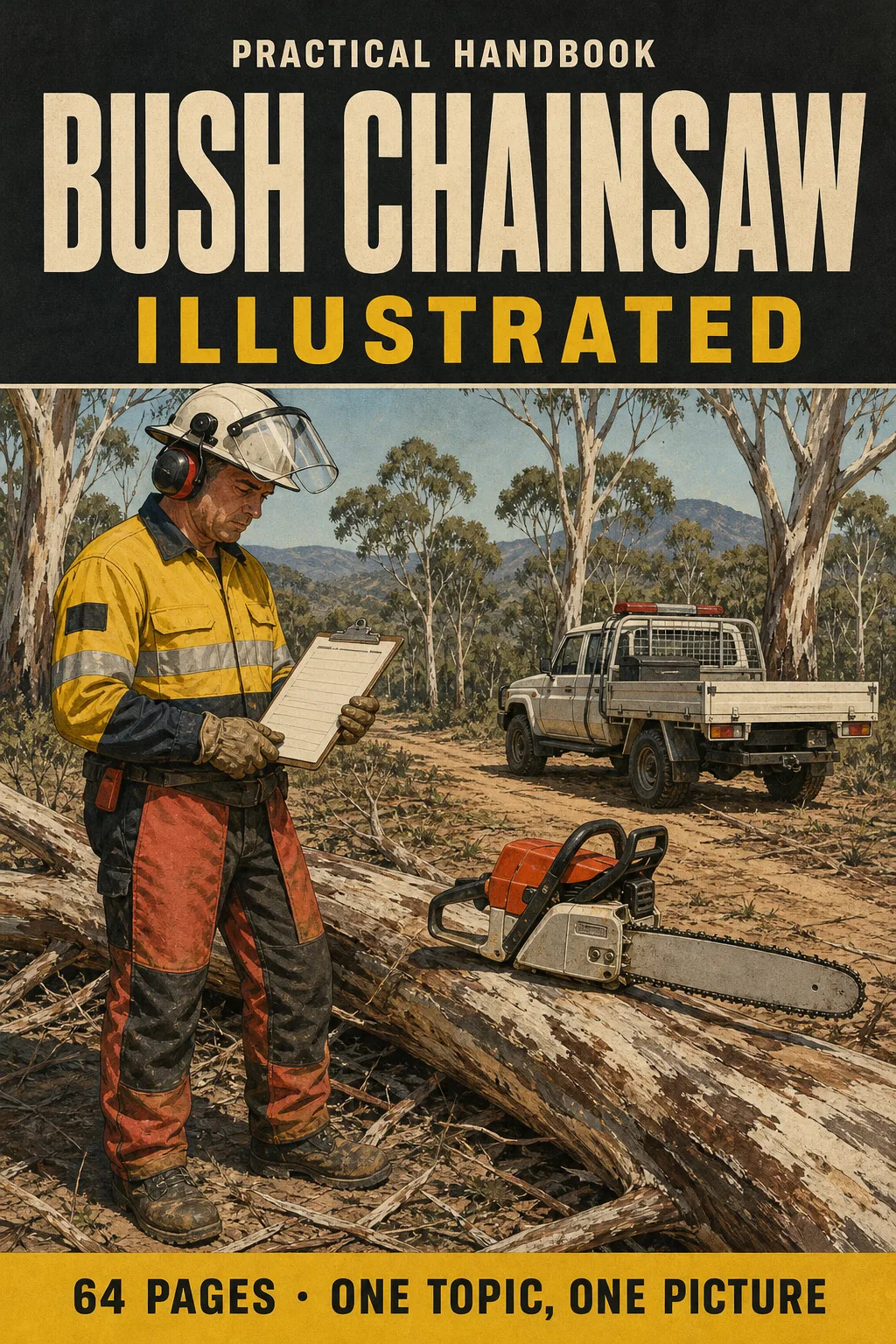
Clearing Fallen Timber with a Chainsaw, in Drawings, for Australian Brigades and Landholders One Topic on Every Page

Protective gear, pre-start checks, chain sharpening in millimetres, the depth gauge, kickback, tension and compression, limbing and cross-cutting, and when to walk away. Every topic has its own page: the drawing first, then what you need to remember. 64 illustrated pages.

SHOW ME THE 64 ILLUSTRATED PAGES

🔒 Secure checkout · PDF by email · 30-day guarantee

Every topic, its own pageEvery cut and every check drawn, with the explanation beside it
64 illustrated pages9 parts, from the five-step method to the field checklists
Up-to-date sourcesSafe Work Australia guidance, AS 2727 and AS/NZS 4453.3
PDF by emailFormat

Look Inside the Book

Every page has one big drawing and a box with the steps and measurements you need to know:

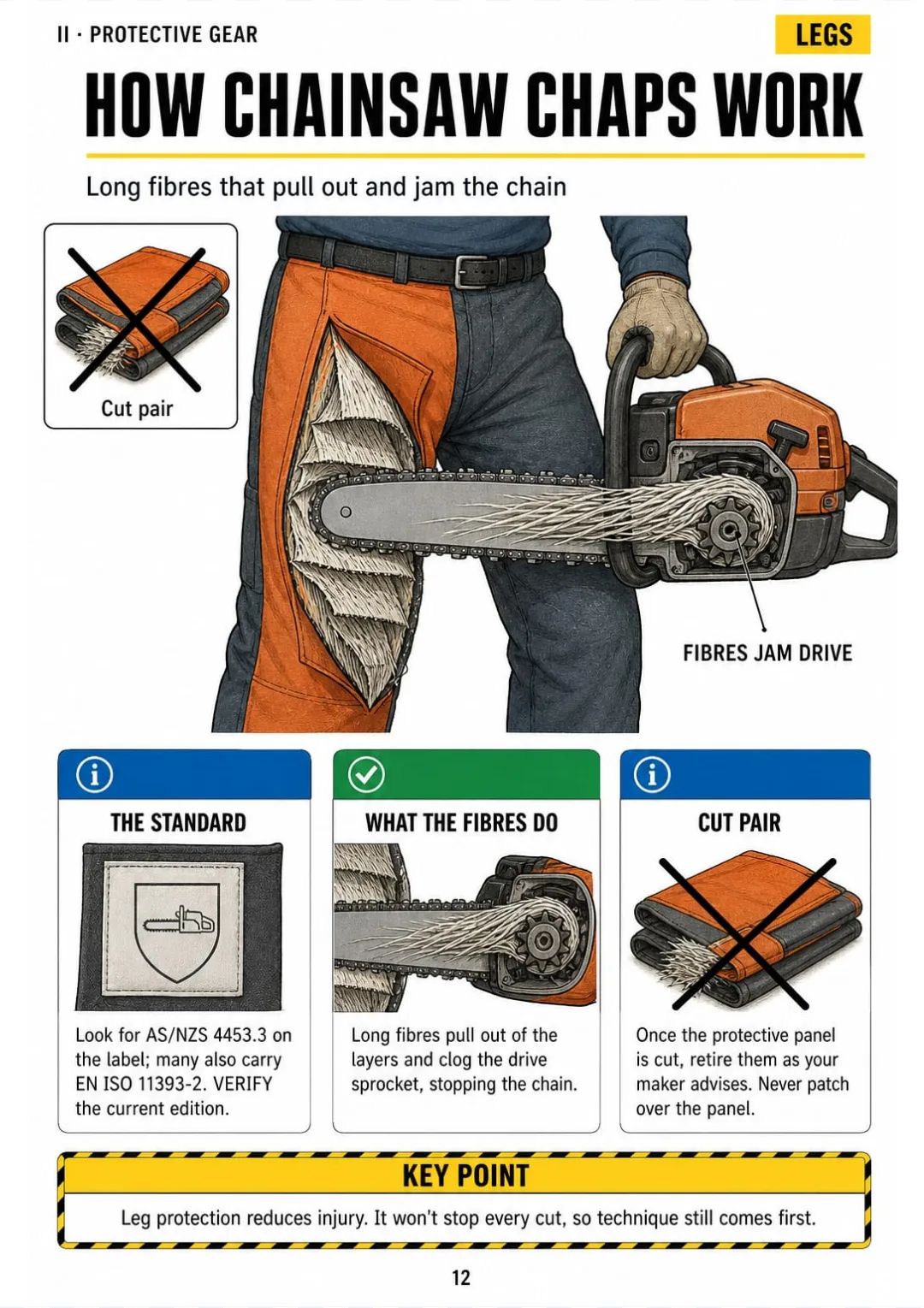
Cutaway of chainsaw chaps: long fibres pull out and jam the drive. Made to AS/NZS 4453.3.
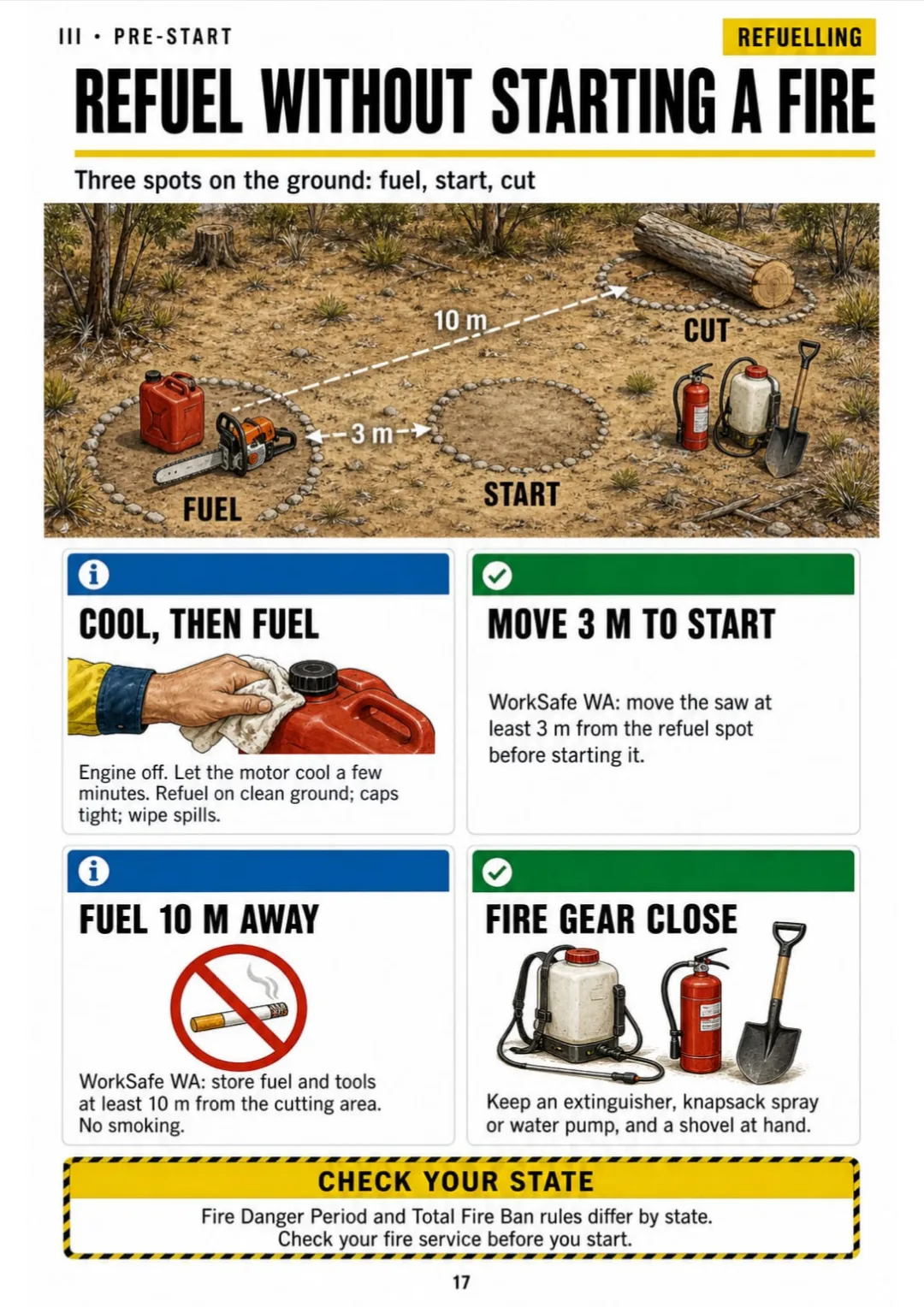
Cool engine, bare ground, 3 m to start, fuel 10 m from the cut (WA guidance).
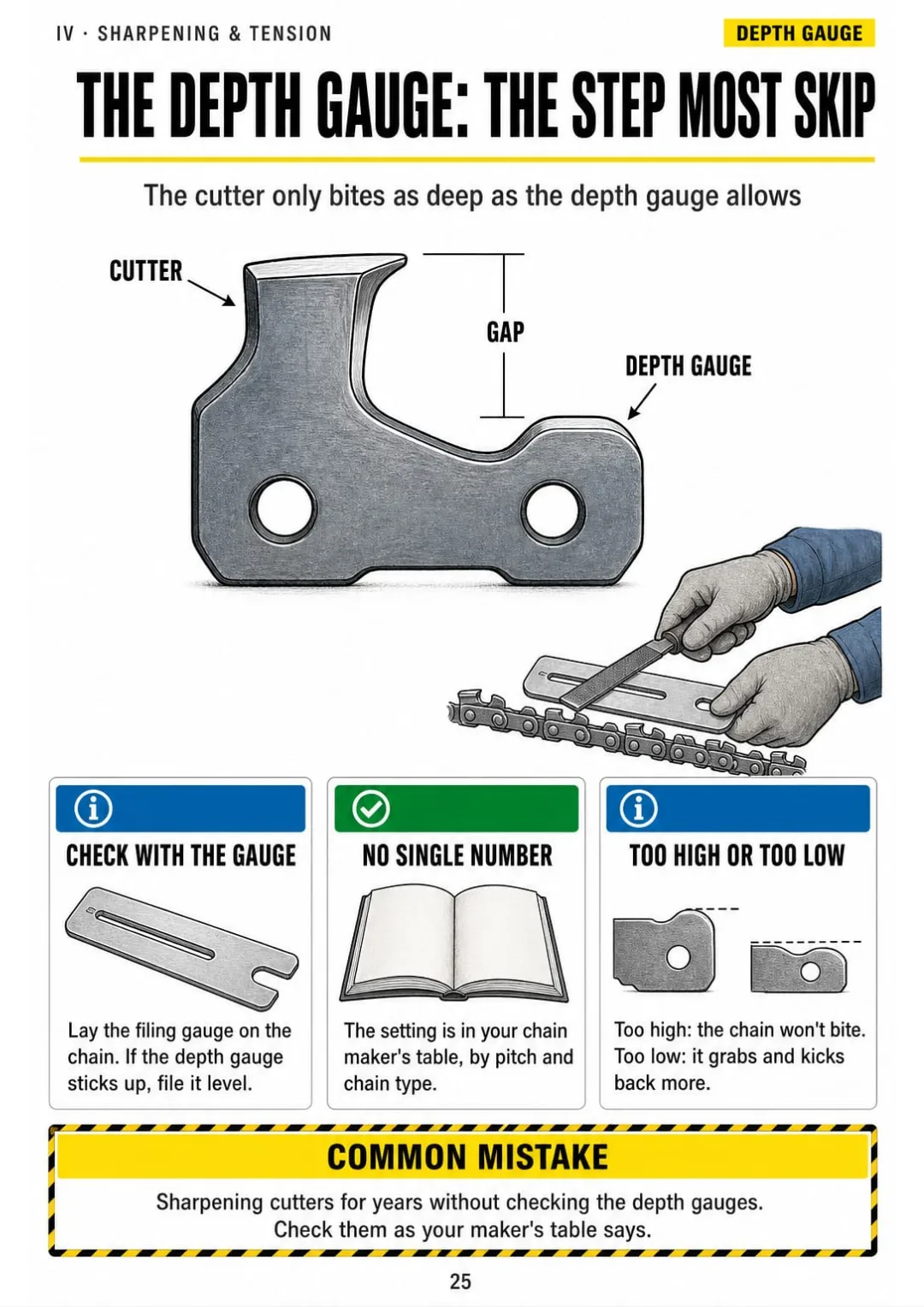
Lower the depth gauge level with a filing gauge, to your chain maker's table.
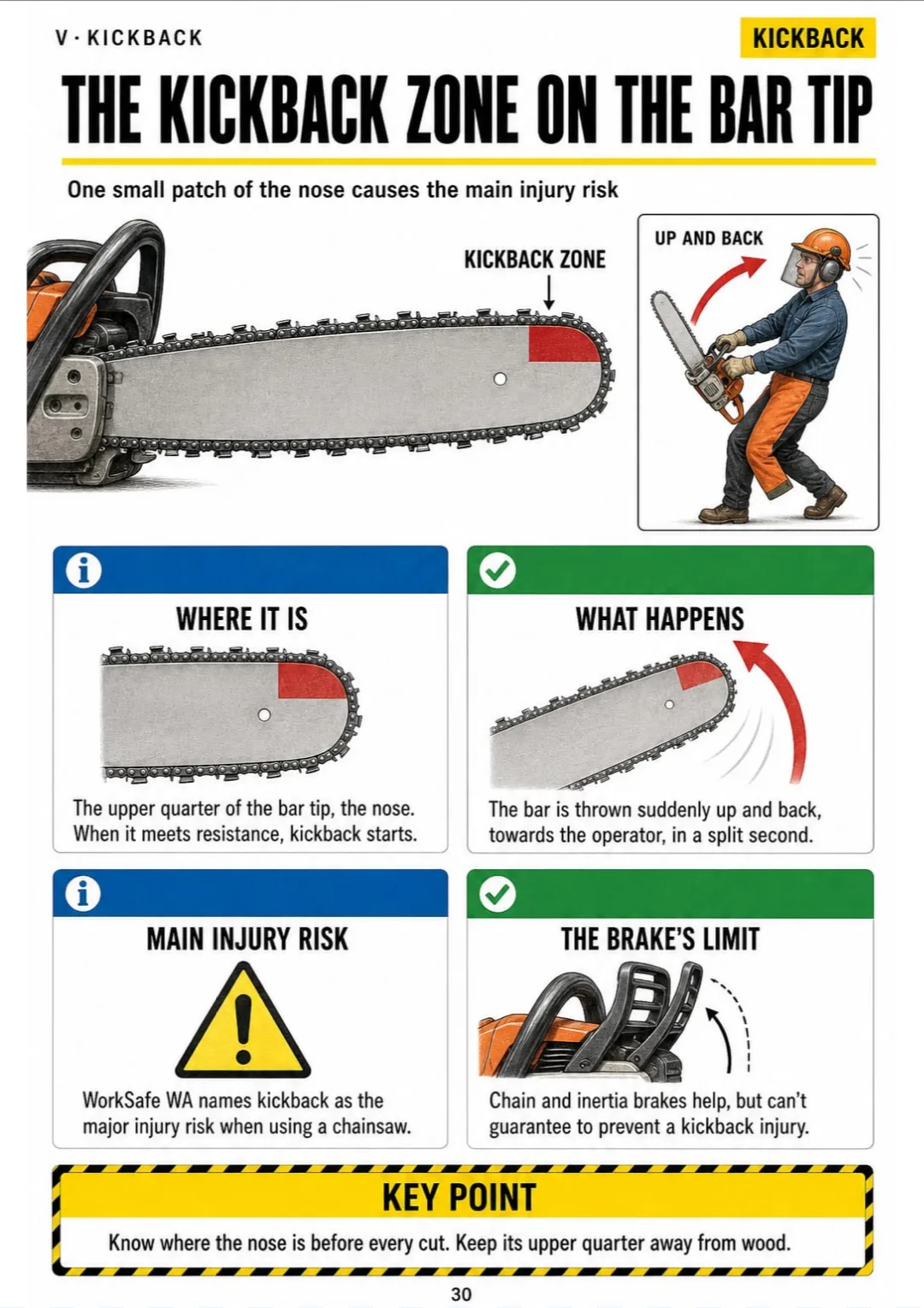
Upper quarter of the bar nose meets wood: the bar flies up and back
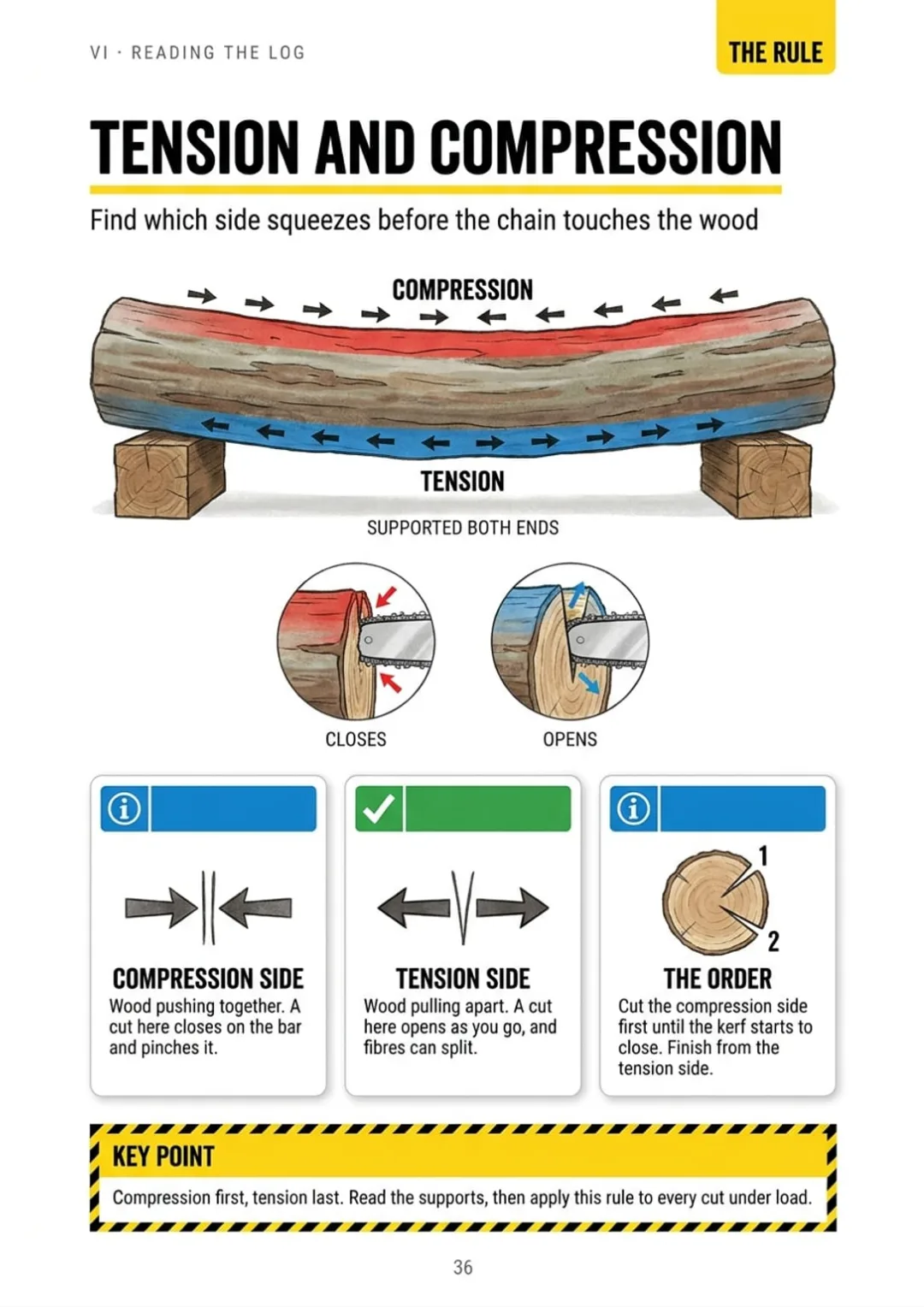
Red side closes, blue side opens: cut compression first, finish from tension.
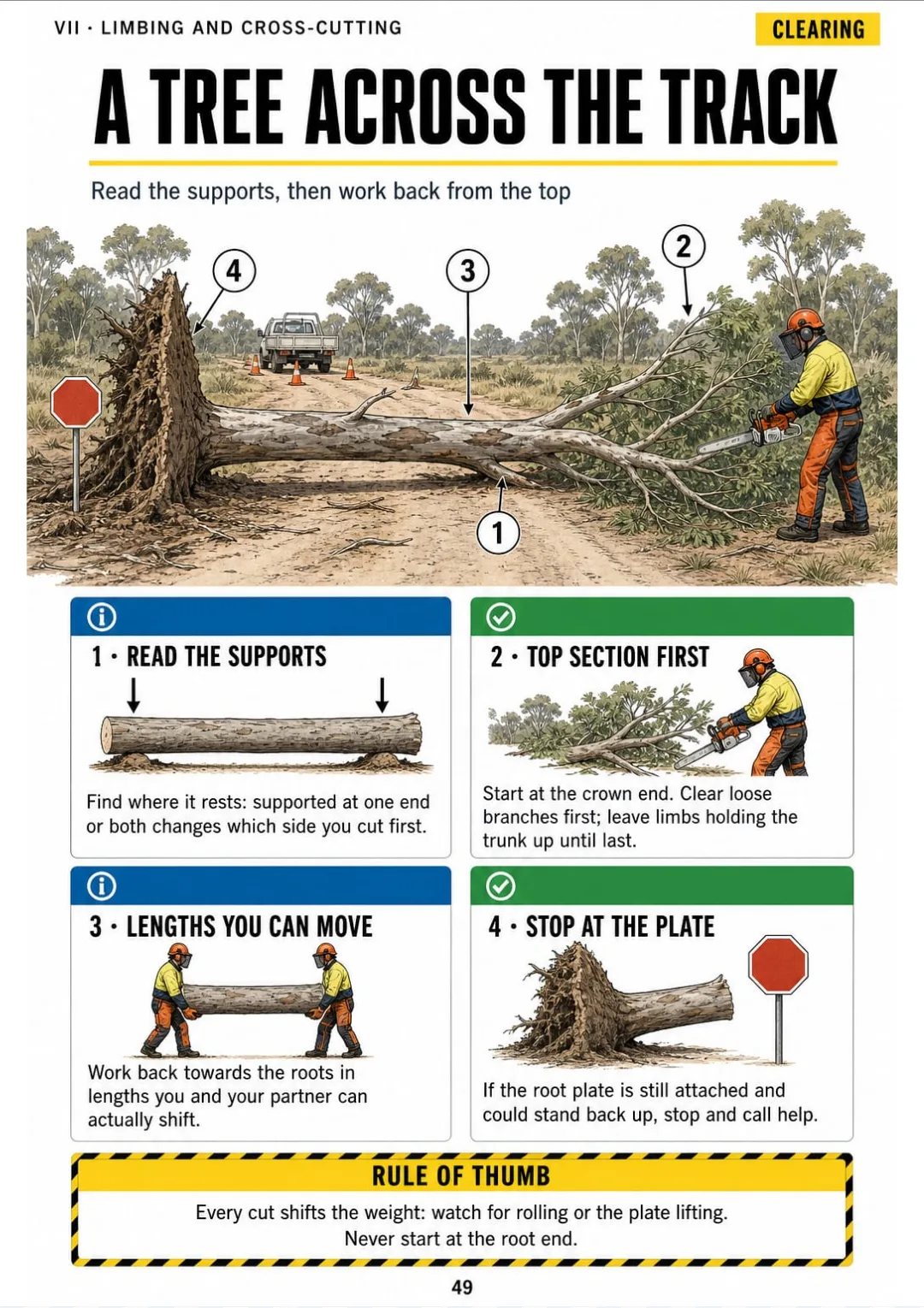
Four steps: read supports, crown first, movable lengths, stop at the root plate
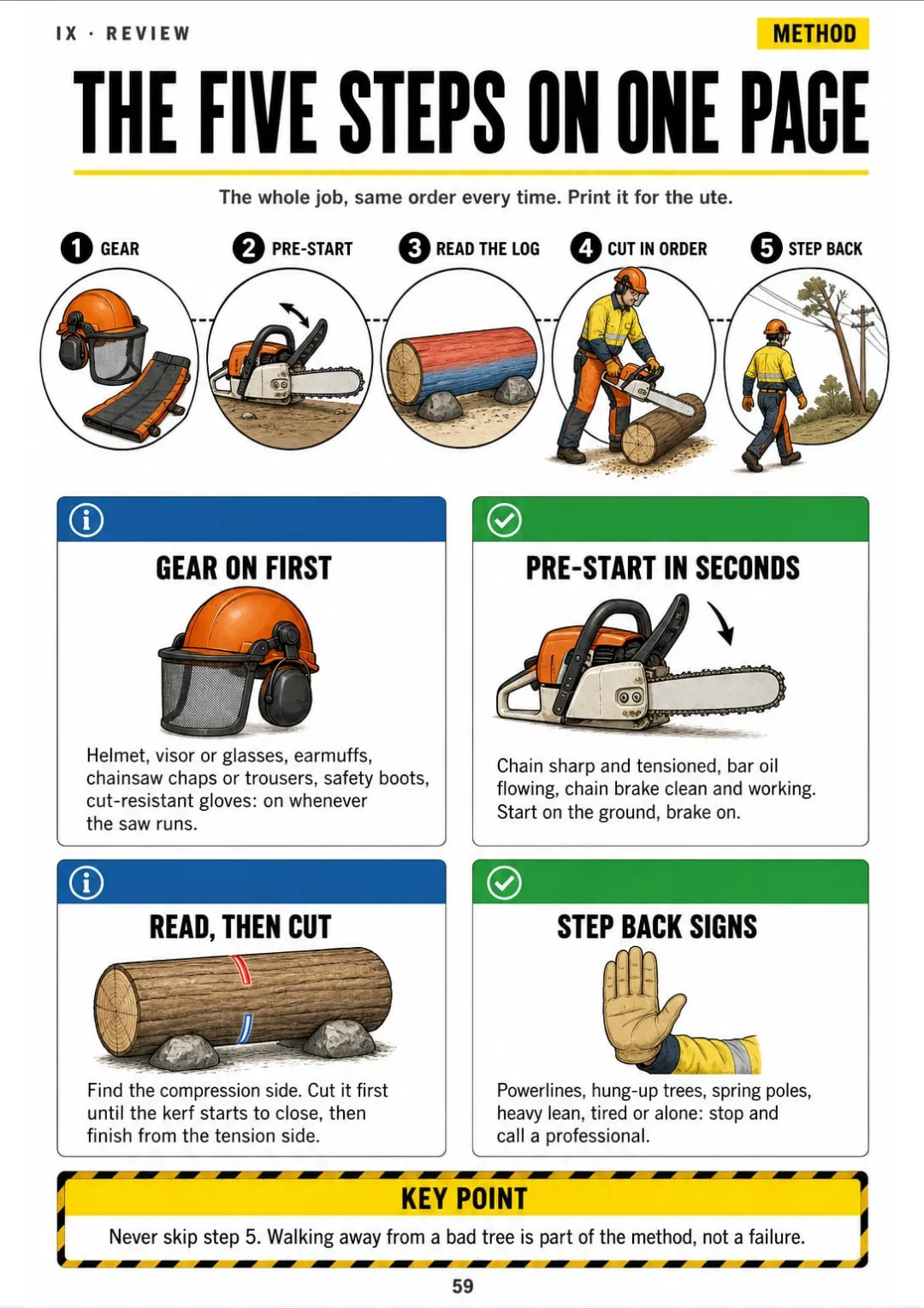
Five steps, always in the same order: gear → pre-start → read the log → cut in order → step back.
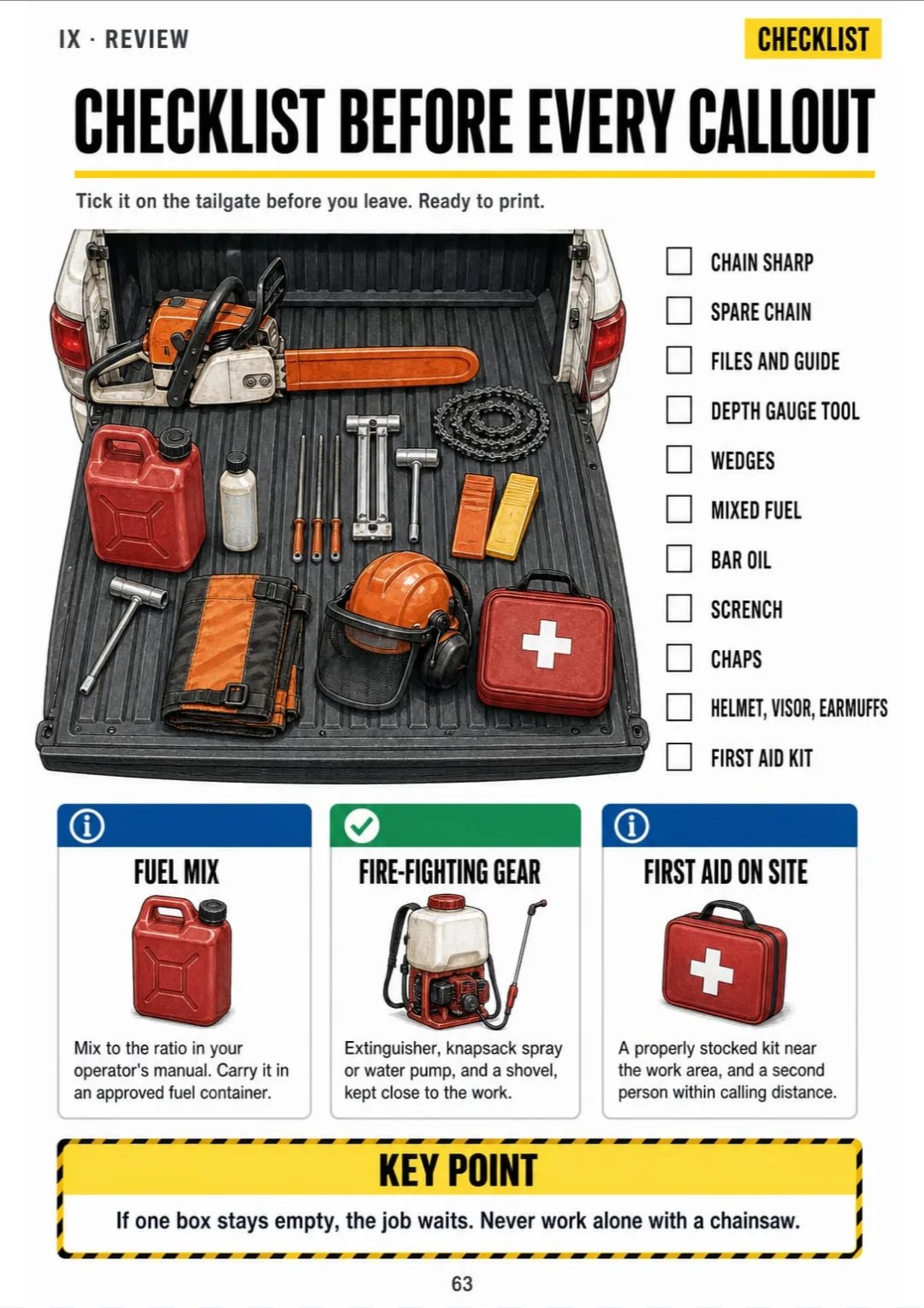
Printable tick-box list: chain, spare, files, wedges, fuel, bar oil, scrench, PPE and first aid kit.

Swipe to see more →

These are real pages from the book. The table of contents is the full one: 9 parts and 60 topics.

The Problem Isn't You. It's How It Was Explained to You.

You've just filed every cutter on the chain, same strokes on both sides, and on the first log the saw still makes fine dust instead of chips, and you have to lean on it to get through.

The manual covers the depth gauge in one paragraph, somewhere between lubrication and storage. No drawing of how far to take it down, or why it matters. So it gets skipped.

Lower the depth gauge level with a filing gauge, to your chain maker's table.

In the book, the depth gauge has its own page: the filing gauge laid across the chain, the flat file bringing the depth gauge down level with it, and a box that sends you to your chain maker's table.

Same with file size, filing angle, a chain that cuts crooked, chain tension, the kickback zone and tension and compression in a log: each one on its own page, with a drawing.

Next time you sharpen, you know which step comes next and what to check when the chain won't cut clean, without going back to the manual.

COMPARE FOR YOURSELF

The Same Topic, Two Ways to Learn It

THIS
  • The manual: line after line of text
  • Refuelling and starting explained only in words
  • You get to the job still unsure
Prior to refuelling, the operator shall ensure that the engine has been stopped and allowed to cool sufficiently. Refuelling should be undertaken on bare mineral earth, clear of combustible vegetation, and fuel containers should be positioned at an appropriate distance from the work area. Following refuelling, any spilt fuel must be wiped from the saw and the fuel cap securely tightened. The saw should then be moved a minimum distance from the refuelling point before starting, in accordance with applicable state guidance and the manufacturer's instructions.
FOR THIS
  • Refuelling in one drawing
  • The distances in a box: 3 m and 10 m
  • You see it and you get it
Cool engine, bare ground, 3 m to start, fuel 10 m from the cut (WA guidance).
CONTENTS

Take a Look at the 9 Parts and 60 Topics

The method and the saw, protective gear, pre-start checks, sharpening and tension, kickback, reading the log, limbing and cross-cutting, when to walk away, and review checklists: 64 pages, all illustrated

IThe Method and the Saw · pp. 5-9
  1. One method, the same five steps every time
  2. Your saw, part by part
  3. Bar length and saw size for bush clean-up
  4. Chain anatomy: cutter, depth gauge, drive link
  5. Who this book is not for and what it doesn't replace
IIProtective Gear, Head to Boots · pp. 10-14
  1. The full kit at a glance
  2. Helmet, visor and earmuffs
  3. How chainsaw trousers and chaps actually work
  4. Boots and gloves
  5. Gear on a hot day and a fire ground
IIIPre-Start Checks and Starting · pp. 15-20
  1. The pre-start walk-round in seven checks
  2. Fuel mix and bar oil
  3. Refuelling without starting a fire
  4. Spark arrestor and air filter
  5. Starting on the ground, chain brake on
  6. Test the chain brake before the first cut
IVSharpening and Tension in Millimetres · pp. 21-29
  1. Why a blunt chain cuts crooked
  2. Choosing the right file size
  3. Filing angle and file height
  4. Same strokes, same length, both sides
  5. The depth gauge: the step most people skip
  6. When the chain is past sharpening
  7. Tensioning the chain correctly
  8. Hot chain, cold chain
  9. Bar care: groove, rails and turning it over
VKickback and Safe Body Position · pp. 30-35
  1. The kickback zone on the bar tip
  2. What causes kickback in fallen timber
  3. Pinch and pull-in: the other two reactions
  4. Stance and grip
  5. Never above shoulder height, never one-handed
  6. Moving between cuts
VIReading the Log: Tension and Compression · pp. 36-43
  1. Tension and compression in one drawing
  2. Log lying flat on the ground
  3. Log supported at both ends
  4. Log supported at one end
  5. Spotting bind before you cut
  6. When the bar gets stuck
  7. Using wedges in cross-cuts
  8. Big logs longer than the bar
VIILimbing and Cross-Cutting in Order · pp. 44-53
  1. Plan the job from above
  2. Working with a partner
  3. Limbing: work from the butt to the top
  4. Branches under load
  5. Cross-cutting on a slope
  6. A tree across the track
  7. Root plate and stump hazards
  8. Cutting firewood lengths
  9. Storm-damaged timber
  10. Fire-affected logs
VIIIWhen to Walk Away · pp. 54-58
  1. The stop-and-call signs
  2. Power lines
  3. Spring poles and hung-up trees
  4. Fatigue, heat and working alone
  5. If someone is cut
IXReview and Field Checklists · pp. 59-64
  1. The five-step method on one page
  2. Common mistakes in cross-cutting
  3. Common sharpening mistakes
  4. Tension and compression quick quiz
  5. Saw and gear checklist before every callout
  6. Storing the saw between jobs

One Page, One Topic, All Clear

Think of it this way:

A storm has brought a gum down across the track, held up at one end by a stump, and the crew is waiting for you to make the first cut.

You open the page on tension and compression and see the red side that closes and the blue side that opens, with the cuts numbered 1, 2, 3.

Red side closes, blue side opens: cut compression first, finish from tension.

Same with the depth gauge, the kickback zone, refuelling on bare ground and the stop-and-call signs: each topic on its own page.

Bush Chainsaw Illustrated is 9 parts and 60 topics, all drawn, and at the end you get the five steps on one page, the common mistakes, a quick quiz and a checklist for every callout.

What you see drawn, you don't have to memorize.

What's Inside Bush Chainsaw Illustrated:

Ipp. 5-9

The Method and the Saw

Start with the order you'll repeat on every job: the five-step method, your saw part by part, the right bar length for bush clean-up, chain anatomy, and what this book doesn't replace.

IIpp. 10-14

Protective Gear, Head to Boots

The full kit at a glance, helmet, visor and earmuffs, how chainsaw trousers and chaps work, boots and gloves, and gear on a hot day or a fire ground.

IIIpp. 15-20

Pre-Start Checks and Starting

The seven-check walk-round, fuel mix and bar oil, refuelling without starting a fire, spark arrestor and air filter, starting on the ground and testing the chain brake.

IVpp. 21-29

Sharpening and Tension in Millimetres

Get a chain that cuts clean again: why a blunt chain cuts crooked, file size, filing angle and height, the depth gauge, when a chain is past sharpening, tension hot and cold, and bar care.

Vpp. 30-35

Kickback and Safe Body Position

The kickback zone on the bar tip, what causes kickback in fallen timber, pinch and pull-in, stance and grip, and moving between cuts.

VIpp. 36-43

Reading the Log: Tension and Compression

Know where the bar will pinch before you cut: tension and compression in one drawing, logs flat, supported at both ends or at one end, spotting bind, freeing a stuck bar, wedges and logs longer than the bar.

VIIpp. 44-53

Limbing and Cross-Cutting in Order

Planning from above, working with a partner, limbing from butt to top, branches under load, slopes, a tree across the track, root plates, firewood, storm and fire-affected timber.

VIIIpp. 54-58

When to Walk Away

The stop-and-call signs, power lines, spring poles and hung-up trees, fatigue, heat and working alone, and what to do if someone is cut.

IXpp. 59-64

Review and Field Checklists

The five steps on one page, common cross-cutting and sharpening mistakes, a tension and compression quiz, the callout checklist and storing the saw.

At the end of the book: The five steps on one page, the common mistakes, a tension and compression quiz and printable checklists for every callout.
Plus: 2 Free Books

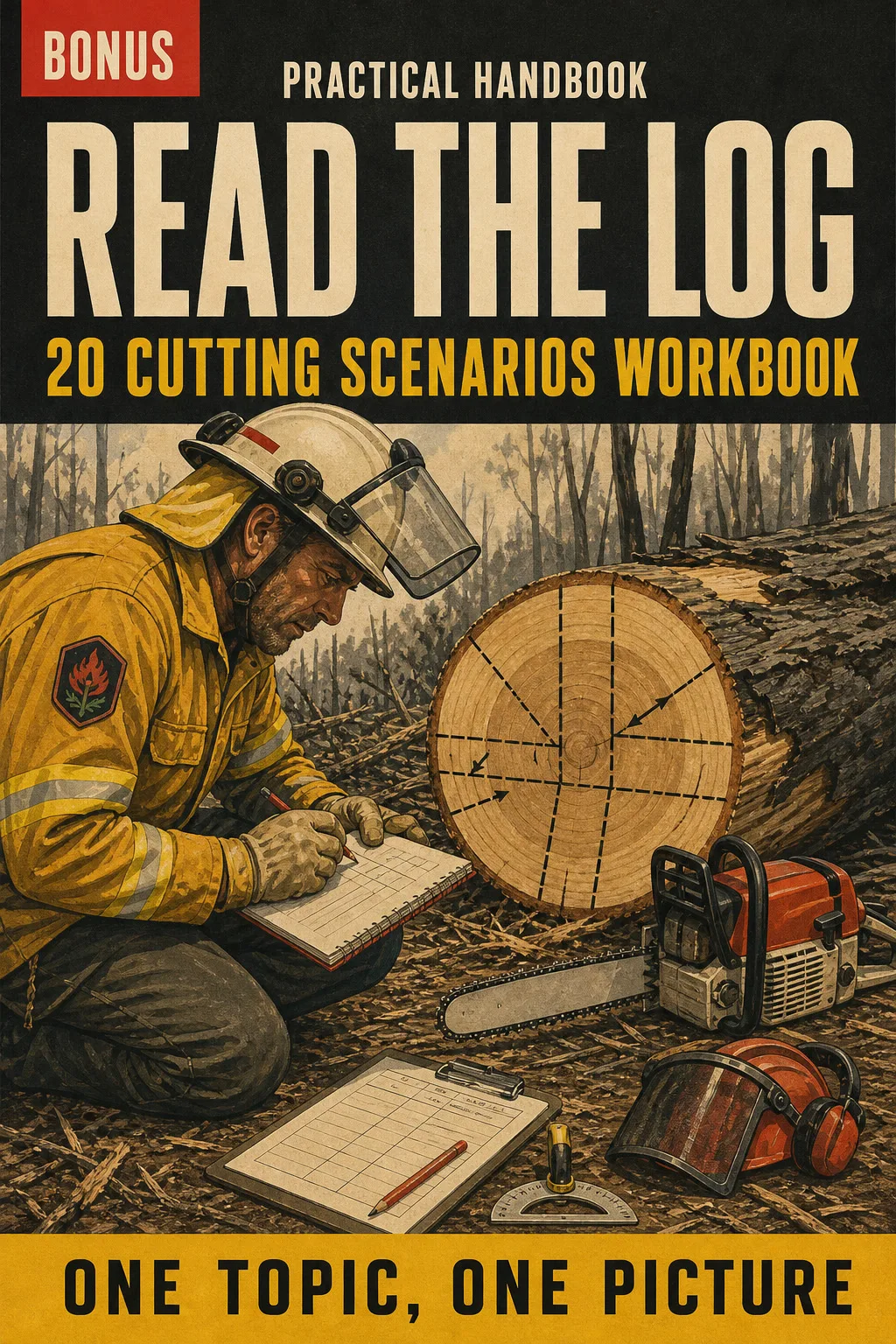
Read the Log: 20 Cutting Scenarios Workbook

BONUS 1: «Read the Log: 20 Cutting Scenarios Workbook»

Value on its own: US$ 17.90

Twenty drawn logs (on the ground, on a support, across a track, on a slope): you mark where it will pinch and the order of cuts, then check the answer on the next page.

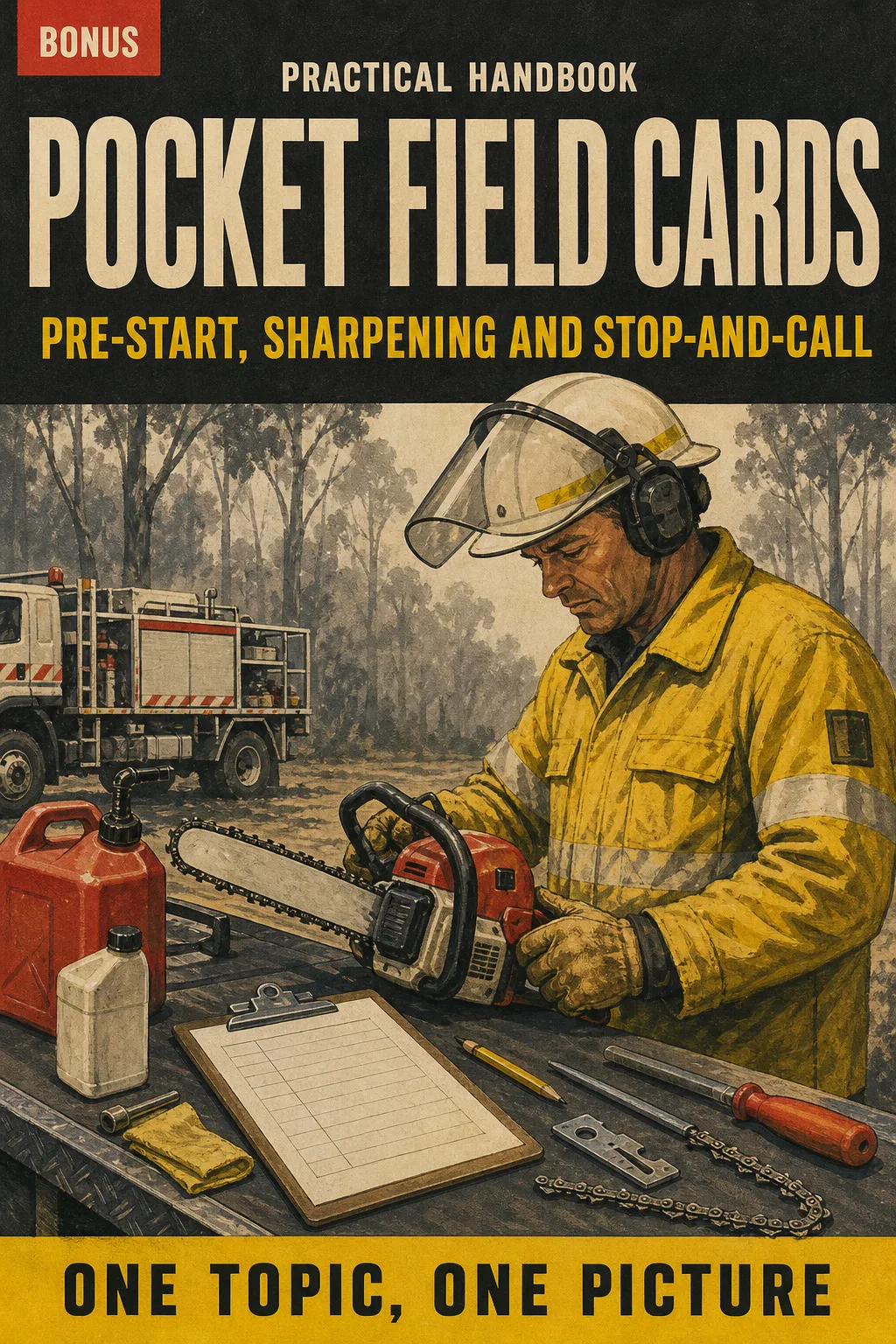
Pocket Field Cards: Pre-Start, Sharpening and Stop-and-Call

BONUS 2: «Pocket Field Cards: Pre-Start, Sharpening and Stop-and-Call»

Value on its own: US$ 14.90

The checks, file sizes, tension test and walk-away signs on printable cards to keep in the ute, so you don't have to remember them on the day.

Bush Chainsaw Illustrated with 2 Free Books

  • Bush Chainsaw Illustrated: 64 illustrated pagesUS$ 63
  • BONUS 1: Read the Log: 20 Cutting Scenarios WorkbookUS$ 17.90
  • BONUS 2: Pocket Field Cards: Pre-Start, Sharpening and Stop-and-CallUS$ 14.90
  • High-resolution PDF to printIncluded
Total value US$ 95.80
YOUR PRICE:
US$ 27
You save US$ 68.80
YES, I WANT BUSH CHAINSAW ILLUSTRATED FOR US$ 27

📄 This is a digital PDF book sent to your email: nothing is printed or shipped.

Secure purchaseEncrypted payment30-day guarantee

PDF by email: We email you Bush Chainsaw Illustrated as a PDF, together with the two free books. It's a single payment: no installments, no extra charges.

Who This Book Is For

Your chainsaw course or reassessment is coming up

Your chainsaw course or reassessment is coming up

You've run a saw for years after watching someone else. Before the course, you go over every step in one order, page by page, so you don't go blank in front of the trainer.

Storm or fire season is coming

Storm or fire season is coming

Before the next callout you go over gear, pre-start checks and reading the log in an evening, and print the field cards for the ute.

You already cut on your block

You already cut on your block

When a tree comes down across the driveway or the fence, you open the page, read the supports and plan the cuts before you start the saw.

Everything You Get Today

US$ 95.80US$ 27
YES, I WANT BUSH CHAINSAW ILLUSTRATED FOR US$ 27

📄 This is a digital PDF book sent to your email: nothing is printed or shipped.

30DAYS
GUARANTEE

30-Day Guarantee

Try Bush Chainsaw Illustrated for 30 days, bonus books included.

We refund everything if the file won't open, if the book isn't what you see here, if you were charged twice or if the email doesn't arrive. Just email us.

You pay once. No subscriptions.

Frequently Asked Questions

Is it for me if I've been using a chainsaw for years?

Yes. It isn't a first-day course: it puts what you already do into one order, page by page, from reading the log to the depth gauge and kickback, so you stop cutting by eye.

Is it written for Australia, or is it an American book translated?

Written for Australia. It follows Safe Work Australia guidance on plant, AS 2727 on safe chainsaw work, the AS/NZS standards for helmets, eye, hearing and leg protection, state WHS regulators' guidance and manufacturers' operator manuals. Every measurement is metric: file sizes in millimetres, distances in metres. The book explains it all in its own words and drawings and doesn't reproduce any standard.

Is this official material?

No. It's an independent illustrated book, not published, approved or endorsed by Safe Work Australia, Standards Australia, any state regulator, fire service, SES or chainsaw maker.

Does it replace hands-on training?

No. It's reference material to review and keep handy. It doesn't give you a chainsaw ticket or count towards any accredited unit, and it doesn't replace hands-on training through your brigade, agency or a training provider, your agency's procedures or your saw's operator manual. Felling standing or burnt trees is left to trained fallers.

Are the practice scenarios from a course or assessment?

No. The 20 cutting scenarios and the quiz are written for this book. They aren't questions from any official course or assessment.

How do I get it?

As a PDF by email, to the address you enter at checkout, together with the 2 bonus books.

Do I have to pay every month?

No. It's a one-off payment, with no subscription.

Can I have it on paper?

Yes. Print the PDF at home or at a print shop. The field cards are made to print and keep in the ute.

How does the refund work?

You have 30 days. We refund everything if the file won't open, if the book isn't what you see on this page, if you were charged twice or if the email doesn't arrive: just email us.

Before You Close This Page

No more rereading the manual with nothing sticking.

Tension and compression: you see them drawn, and that's it.

You get to the job knowing where everything is.

Drawings make studying faster.

The book is right below.

One-time payment: US$ 27 · Guarantee: 30 days · PDF by email

YES, I WANT BUSH CHAINSAW ILLUSTRATED FOR US$ 27

📄 This is a digital PDF book sent to your email: nothing is printed or shipped.